A city built across 14 islands, connected by more than 50 bridges, and alive even on the coldest, greyest days.
Stockholm's capital sits across 14 islands where Lake Mälaren meets the Baltic Sea, connected by more than 50 bridges — earning it the nickname "Venice of the North." But Stockholm never needed the comparison. It's quieter, cleaner, and entirely its own thing.
We visited in late November, when temperatures hovered around 0–3°C and the sky went dark before 4:30 in the afternoon. What we got in return was something no other season offers: Christmas lights strung along the streets, open-air markets filling the old squares, and the smell of warm glögg drifting out from small shops along the way. Somehow, everything felt warmer than the weather suggested.
Getting There

We flew Thai Airways on the direct BKK–ARN route — 12 hours in the air, which sounds long but genuinely didn't feel that way. The food was good, the service reliable, and we slept well enough that Stockholm came as a pleasant surprise rather than a bleary arrival.
Route BKK → ARN Bangkok – Stockholm Arlanda
Flight Time ~~12 hrs Non-stop
Airport to City 18 min Arlanda Express → Stockholm City

From the airport, we took the Arlanda Express — a fast train that connects directly to the terminal, with no need to step outside. Eighteen minutes later, we were at Stockholm Central Station, right in the heart of the city. Clean, spacious, and exactly on time in the way you'd expect from Sweden.
We stayed at Scandic Wallin, an easy walk from Stockholm Central. The room was classic Scandinavian — simple, clean, the right size — and the breakfast buffet was varied enough to make leaving on time a small challenge every morning.
Gamla Stan

Gamla Stan is where the city started, back in the 13th century, and it still feels that way. Streets too narrow for cars, buildings in yellow, orange, and brick red that have stood for over 400 years, and alleyways you wander without needing a map. The age of this place isn't just in the history books — it's in the stone underfoot, in the smell of old wood from shops that have been open longer than anyone can remember, in the candlelight appearing in windows as the cold sets in.
Late November is a particularly good time for Gamla Stan. The shops are already dressed for Christmas, the atmosphere is warmer than the numbers suggest, and every corner you turn has something worth stopping for.
Mårten Trotzigs Gränd

Stockholm's narrowest alley is just 90 centimetres wide. Two people can pass each other, barely. Tall mustard-yellow buildings rise on both sides, 36 steps lead upward, and the light that falls between the walls is the kind no editing app can replicate. Named after a German merchant who owned land here in the 16th century, though nobody standing in it is thinking about that.
Stortorget

Walk out from Mårten Trotzigs Gränd, and you arrive at Stockholm's oldest square, ringed by the yellow and orange-red building facades that appear on every postcard of the city. The history here is heavier than it looks — in 1520, this was the site of the Stockholm Bloodbath, where the Danish king ordered the execution of more than 90 Swedish nobles. Today it's full of tourists, photo spots, and in late November, a Christmas market that brings the whole square to life.
Nobel Prize Museum

A white building right beside Stortorget, formerly the old stock exchange. Inside, it tells the stories of Nobel laureates across every field since 1901 — not just names and dates, but the ideas and long processes behind each discovery. Worth a long visit for anyone interested in how people change the world. We arrived to find it closed that day, so we settled for photographs outside, which were still worth taking.
Stockholm Royal Palace
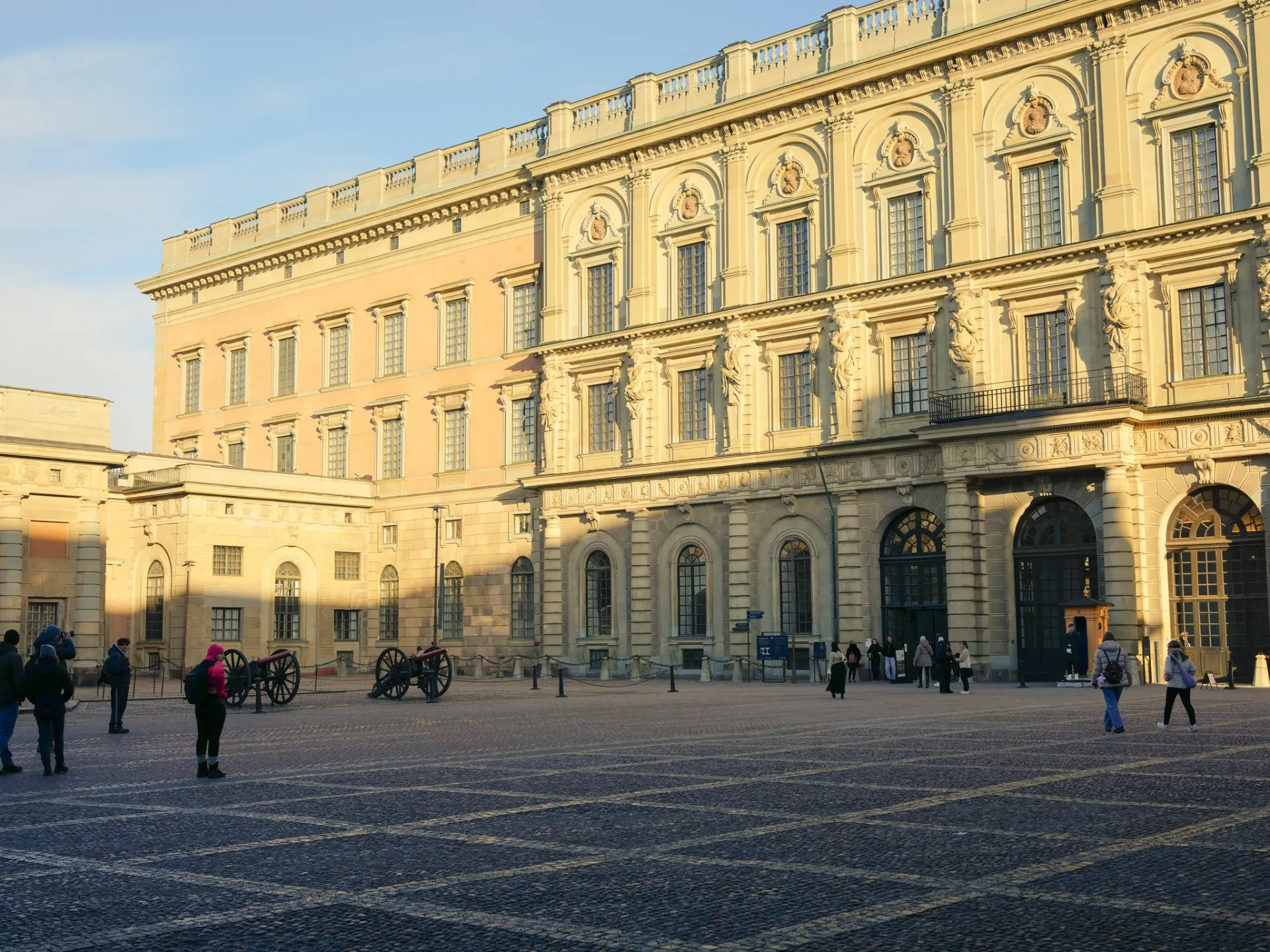
Head north out of Gamla Stan, and you walk straight into the palace. A baroque Italian-style building constructed in the 18th century, with over 600 rooms and a claim as one of the largest palaces in Europe. It remains the official residence of the Swedish monarch, though the royal family lives day-to-day at Drottningholm Palace outside the city. If you time it right, you'll catch the changing of the guard — unhurried, precise, and genuinely worth watching.

Vasa Museum

If you're only going to one museum in Stockholm, make it this one. Inside sits the warship Vasa, built in 1628 to project Swedish naval power — then sunk within 20 minutes of leaving the harbour because the upper decks were too heavy. It lay at the bottom of the sea for 333 years before being salvaged in 1961, over 98% intact. Standing beneath it and looking up at the detailed wood carvings, you find yourself thinking about the craftsmen who built it, knowing it would never make a second voyage.

Skeppsbron & Nationalmuseum

Skeppsbron runs along the waterfront beside Gamla Stan, with the old city on one side and moored boats on the other. A comfortable walk, especially in the afternoon when there's still some light left. Continuing along the water brings you to the Nationalmuseum

Sweden's largest art museum, a Renaissance Revival building in deep red brick sitting on a peninsula with water on three sides. Beautiful in daylight, and striking again in the evening when it's lit up. Worth the detour even if you don't go inside.
Kungsträdgården
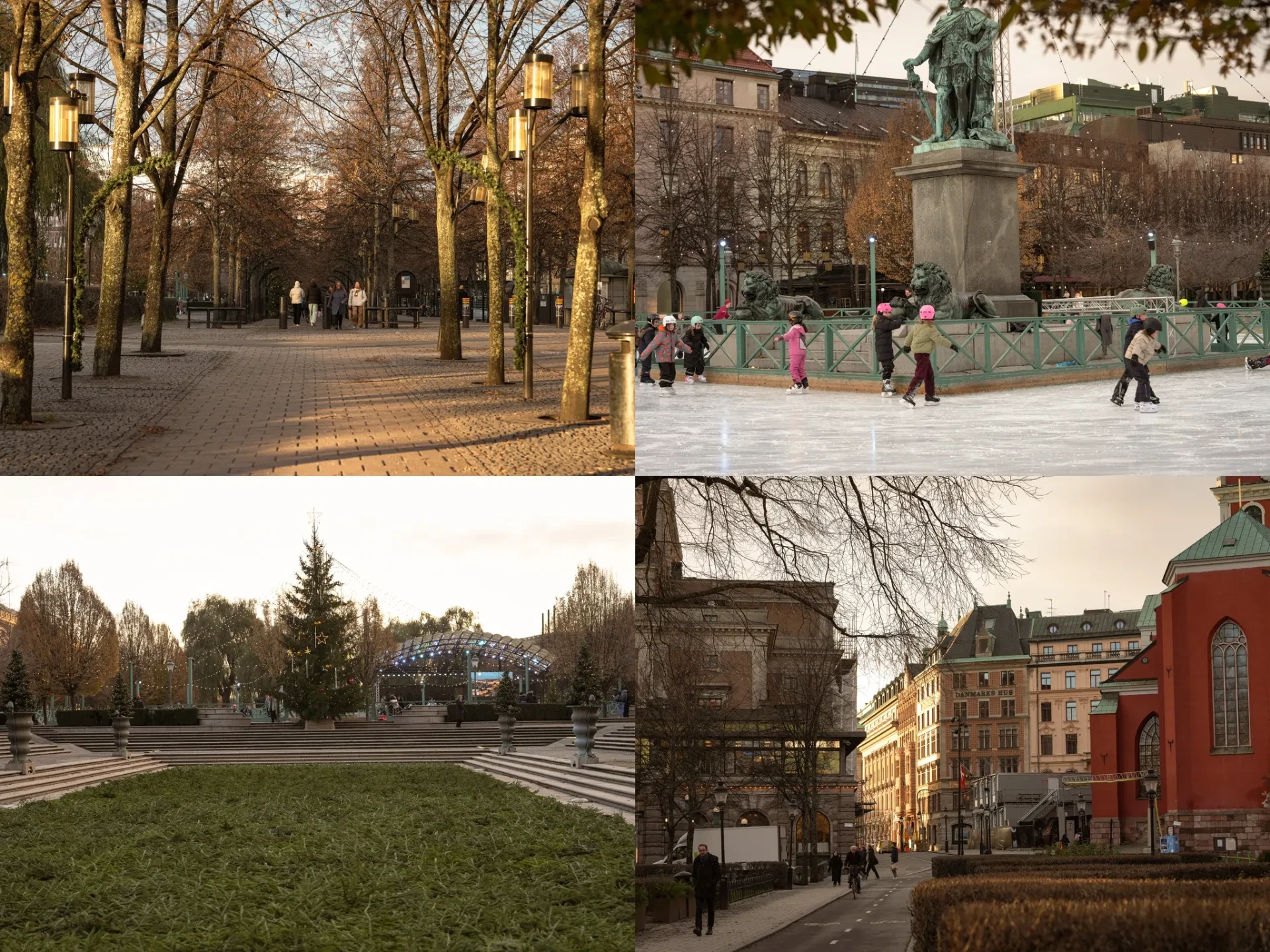
A public park in the centre of the city that shifts with the seasons. Famous for cherry blossoms in spring, concerts in summer, but in winter, it becomes an outdoor ice skating rink, busy and cheerful. The sound of blades on ice, quiet Christmas music, the smell of warm glögg from a nearby stall — the kind of atmosphere that doesn't translate well into words, and you only really understand once you're standing there.
Riksdagshuset

The Swedish parliament building sits on a small island between Gamla Stan and the city centre. A pale Neoclassical building from the late 19th century — symmetrical, clean-lined, very Swedish. The arched walkway through the building is a popular spot for photographs. It falls naturally on the route between neighbourhoods, so it's easy to stop without going out of your way.
Drottninggatan

Stockholm's longest and busiest pedestrian shopping street. International brands, cafés, bookshops, and souvenir stores line both sides. You can walk it for most of the day without running out of things to look at, and it's one of the best places to watch how the city actually moves.
Meatballs for the People

Coming to Sweden and not eating meatballs would be missing the point, but this restaurant takes the dish further than most. Beyond the traditional beef, the menu offers less expected options — we ordered bear and venison, both rich and dense without any gamey smell, served with creamy mashed potato and lingonberry sauce whose sweet acidity cuts right through. Add a local craft beer from their long list, and the meal takes care of itself.
Before You Go
Tap water is safe to drink. Stockholm's tap water is clean and drinkable straight from the source. Bottled water is available but noticeably expensive — bring a reusable bottle and refill it freely.
Sweden runs on cards. Cash is rarely accepted and sometimes not at all. Make sure your card supports Chip + PIN for international use, and let your bank know you're travelling before you leave.
You can walk most of it. The SL network covers trains, buses, ferries, and trams — a Day Pass makes sense if you're moving around a lot. But Gamla Stan, Kungsträdgården, and Nationalmuseum are all within comfortable walking distance of each other.
Late November: cold, but worth it. Expect 0–5°C and darkness from around 4:30 pm. In exchange, you get Christmas lights and markets running from early in the month. Dress in proper layers, and treat gloves as essential rather than optional.
Arlanda Express for the airport. Eighteen minutes from the terminal to the city centre, with the station connected directly to the building. More expensive than the bus, but you don't go outside, you don't have to manage the luggage on stairs, and it runs on schedule.
Trip at a Glance
Day 1 — Arrival + Drottninggatan
Arrived in the evening, checked into Scandic Wallin, then walked the neighbourhood and Drottninggatan. Explored the shops, found dinner, got a feel for the city before anything else began.
Day 2 — Gamla Stan + Waterfront
Morning — Gamla Stan: wandered the alleys, stopped at Mårten Trotzigs Gränd and Stortorget
Midday — Stockholm Royal Palace: walked the exterior, watched the changing of the guard
Afternoon — Skeppsbron walk, photographs at Nationalmuseum along the way
End of day — Vasa Museum
Day 3 — The Loose Ends
Morning — Back to Gamla Stan, the parts still unexplored
Midday — Kungsträdgården, watched the ice skating
Afternoon — Riksdagshuset, photographs at the arched walkway
Evening — Dinner at Meatballs for the People
Fragments of the Trail
Written by
Natthawat Phongchit
Explore beautiful destinations, travel tips, hidden gems, and unforgettable experiences to inspire your next adventure.